The First Steps Always Feel The Hardest. Because They Are.
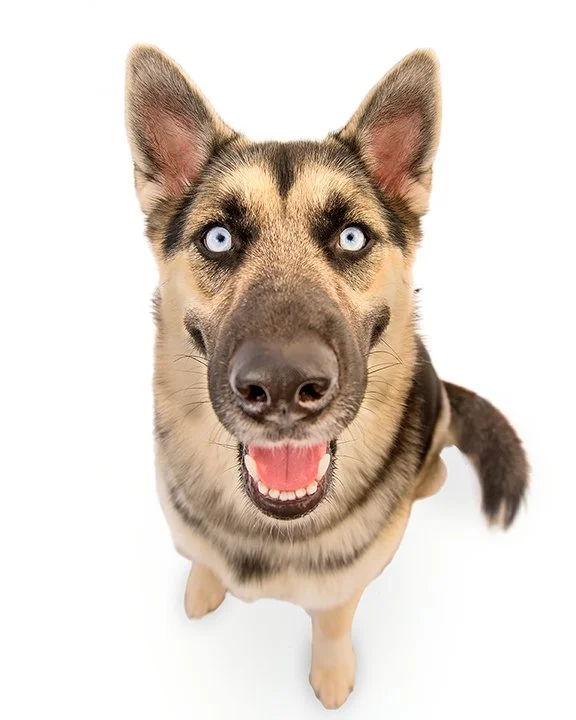
When people begin a training journey with their dog, they often assume the challenge will be mastering difficult new skills. What many people discover instead, is something far more interesting: the dog is not the only one learning.
The first and most difficult stage of training has very little to do with sits or stays. It is the stage where the human begins changing tiny habits, assumptions, and ways of paying attention. Little traits that may have gone unobserved for years.
To be fair, this is true of almost any meaningful pursuit. The beginning feels difficult not because the task itself is hard, but because nothing feels automatic yet. Every action requires conscious effort. The person has not yet learned to naturally do the thing—they are still learning how.
Here are six helpful tips to help you stay on course as you navigate the early stages of this (or any) new journey.
A training session makes sense while it is happening. Then everyday life resumes, and the gap between understanding a new idea and living it every day becomes obvious. Exercises that seemed simple during a lesson suddenly feel harder to remember. Old habits can take over before new ones have had a chance to form.
For many people, these moments create a feeling that they are failing. If the exercises are simple, why is it so hard to remember them? If progress is happening, why doesn't it show up?
These questions are normal, and they reveal a common misunderstanding about what training really is. Training is not simply teaching a dog new behaviors. It is creating a new way of communicating between two sentient beings. The dog is learning how to understand information from the human, while the human is learning how to read and interpret information from the dog. In many ways, both are learning a new language while developing entirely new habits. Both will make mistakes.
One of the most powerful things a person can bring to training (and life) is calmness.
Many people think of calmness as something that matters only after things go wrong—trying to minimize frustration. But its so much more. Dogs are constantly gathering information from us. Long before they understand our words, they notice our breathing, posture, movement, muscle tension, and emotional state. In many situations, the dog mirrors our nervous system before they ever respond to a cue.
When we become tense, rushed, frustrated, or pull on the leash, we often communicate that something is wrong even when we don't intend to. When we remain calm, clear, and predictable, we create an environment where learning becomes easier. This doesn't mean we need to be perfectly calm at all times - not possible for anyone. But it does mean recognizing that our emotional state is a major part of the conversation between human and dog.
Calmness creates space for observation in both directions. It helps us notice what the dog is communicating, and helps our dog feel safe observing us. In that sense, calmness is not passive. It is one of the most powerful forms of leadership we can offer.
One reason the earliest exercises can feel difficult is that they require a different way of seeing. Teaching new cues is not physically demanding on its own. What makes them challenging is that they ask people to notice tiny things they have never noticed before and respond in real-time. The difficulty is not in the exercises…it’s in becoming a patient observer who can consistently recognize opportunities to apply them.
Like any new habit, it feels awkward at first. A person learning to play an instrument expects to make many mistakes. Yet many dog owners hold themselves to a very different standard. They expect themselves to communicate flawlessly with a different species on day one. And sadly, other people in shared spaces too often ramp up the pressure with their own body language and/or verbal commentary.
An antidote to this pressure is remembering to slow down and just enjoy the little moments. Not every interaction needs to stand up to performance metrics. Sometimes the most valuable moments are the simplest ones: a voluntary glance in your direction, a relaxed sit on a park bench, or a quiet moment of connection. These simple no-pressure interactions are the building blocks of a stronger relationship.
Dog training is like a snowball. For a while it stays in “pebble mode” before gaining mass. The most important foundational changes are invisible. Before a dog reliably comes when called, they must first understand the cue, and learn that a reward will follow. Before a dog consistently checks-in, they need to learn that the human values it. The visible behavior is usually the last thing to change.
This reality can make early-stage training feel like a grind. People want immediate results, and progress is happening…just difficult to see. Yet this is exactly where consistency matters most. Today’s new micro-habits become tomorrow’s behavior changes.
This kind of change only comes from keeping at it daily, even when progress feels uncertain. Every thoughtful observation contributes to a larger pattern that may not become obvious until much later.

The same idea applies to setbacks. A missed recall is not a failure…it’s just information. A distracted dog is not being disrespectful. It’s responding to the environment. Humans and dogs both need time to build habits. The line towards greatness is never straight.
One of the most valuable skills a person can develop during training is curiosity. Instead of asking, "Why isn't this working?" ask, "What factors are making this difficult right now?" What might the dog be experiencing in that moment? What are they seeing, hearing, or smelling that could be making the task more difficult? Troubleshooting the "miss" is not a sign of failure. It is evidence of growing awareness.
Progress isn't linear. There will be good days and hard days. There will be moments when it feels like nothing is happening at all. Learning and growing is messy business, and expecting perfection only slows the process down.

It’s common to expect big breakthroughs right away. But change is incremental. A glance in your direction, a slightly faster response than last week…these small changes are the earliest signs that real progress is taking place.
Lasting behavior change is built through hundreds of tiny interactions. The dog learns through experience that the human is predictable and reliable, and they begin to gain clarity about the choices that lead to success.. Little by little, not all at once.
It’s essential to look for and celebrate the tiny wins. If puppy made it outside for potty 3 out of 5 times today, that’s 3 reasons to celebrate (not 2 reasons to be frustrated). If a reactive dog checked-in when a neighborhood dog went by….jackpot! The more you see and celebrate the wins, the more the wins will happen.
In early-stage training, partnership, empathy, and trust can be helpful framing—not as abstract ideals, but as practical habits.
Partnership means remembering that the dog is not an opponent to be controlled or a problem to be solved. The dog is an active participant in the learning process. Looking for opportunities to communicate rather than command, always leads to better outcomes. When a recall fails, the question becomes, "What can I do to help him succeed?" rather than, "Why won’t he listen to me?"
Empathy begins with recognizing that behavior is heavily influenced by emotion and environment. A dog that is distracted or overwhelmed is not capable of calm decision-making. It doesn’t mean lowering expectations forever, just aligning the human’s expectations with the dog’s capacity. Sometimes the most effective training decision is simply making the challenge easier so success becomes possible again.
Trust is built through consistency and predictability. Every time a marker reliably leads to a reward, trust grows. Every time a dog's name leads to a positive interaction, trust is strengthened. Dogs learn faster when the rules are clear, feedback is predictable, and mistakes are treated as information rather than reasons for punishment.
Taken together, partnership, empathy, and trust are essential to a successful training mindset. When a training session goes well, they help explain why. When a training session goes poorly, they provide a constructive place to look for answers. Was the dog truly ready for the challenge? Was the environment too difficult? Was communication clear?
Although these lessons emerge through dog training, they also appear in other areas of life that require growth, patience, and relationship-building. Parents and team-leaders learn that consistency matters more than perfection. Strong relationships are built through many small interactions.
Whether we’re raising a child, leading a team, developing a skill, or helping a dog navigate the world, the process is similar. Over time, the habits that support successful dog training: staying calm under pressure, noticing small wins, showing up consistently, accepting imperfect progress, and centering around trust—begin to influence other areas of life as well.
Dogs may or may not be here to teach us life lessons. It’s possible they may only want our yummy treats and cozy beds. But working with dogs does teach us that genuine human-canine communication requires the same qualities that are valuable in every relationship. The person who learns to listen more carefully, respond more thoughtfully, and approach challenges with curiosity rather than blame, is developing skills that extend far beyond training sessions.
The people and dogs who make the greatest progress are not the ones who never make mistakes. They are the ones who recognize that the first steps are always the hardest. They are the ones who learn to welcome mistakes as an essential part of the learning process. They are the ones who keep practicing even when nothing grand is revealed.
Remember - training isn’t about obedience…it’s about dialog. It’s an opportunity to practice the kind of Partnership, Empathy, and Trust that strengthens every relationship, including the one with ourselves.