Your Dog Will Come When They Want To Come: Why Yelling Louder Doesn’t Improve Recall
When most people think about recall, they think in black and white. Either the dog comes… or the dog ignores them. When a dog doesn’t recall, it’s often labeled as stubbornness or defiance. But it’s time to think differently.
Recall isn’t a test, it’s a conversation. And like any conversation, it only works when both participants are available to engage. At Resilient Rover, we teach that recall is influenced by four variables—the classic “3D’s” of distance, duration, and distraction. And underneath all three is something even more important: your dog’s emotional availability.
What Does “Availability” Really Mean?
A dog can only respond to a cue when their nervous system is capable of processing it.
Sometimes unavailability looks like stress. A dog may be worried, cautious, or nearing their threshold. In those moments, the brain shifts into survival mode. Learning and responsiveness take a back seat to scanning and self-protection.
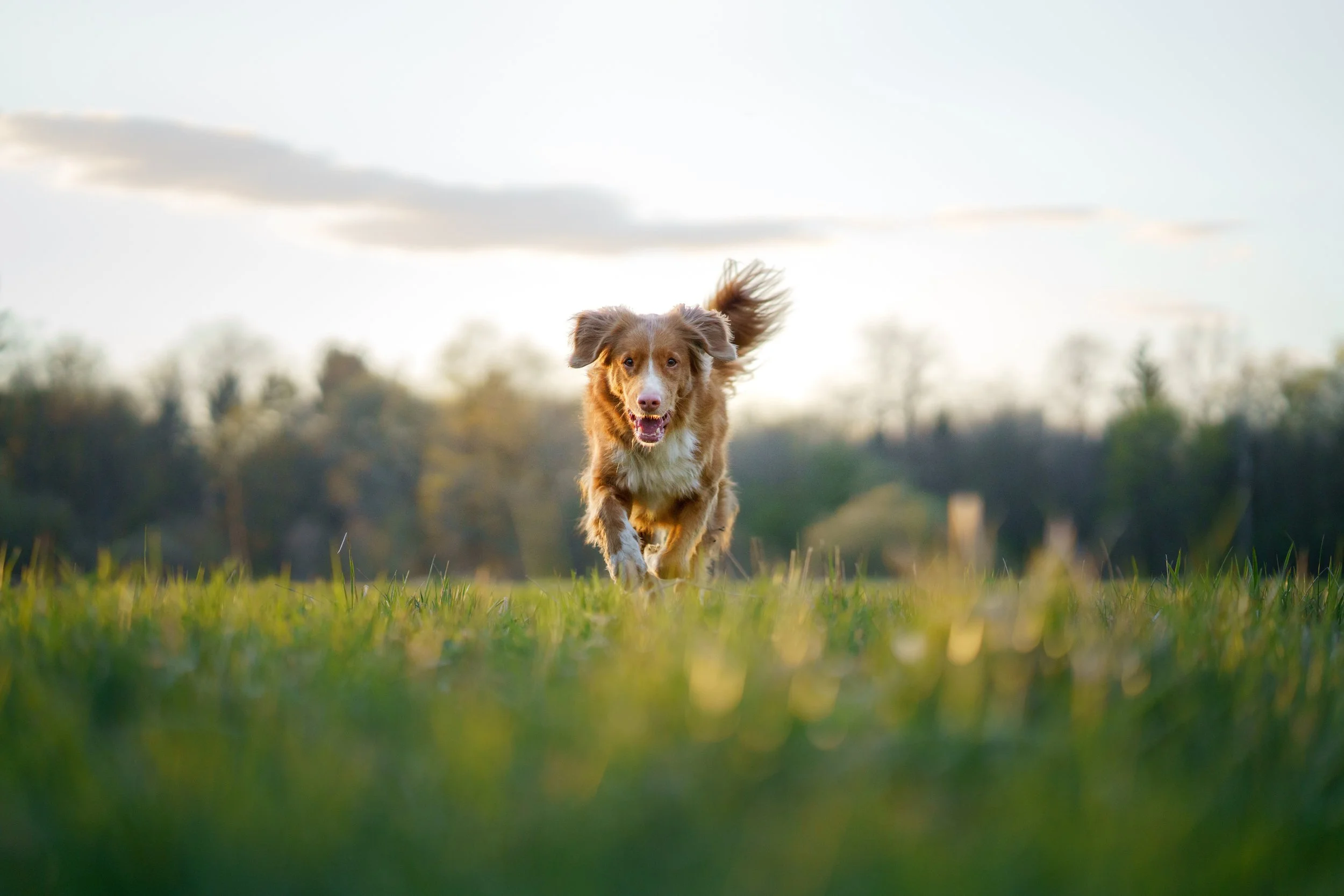
Other times, unavailability looks like pure joy.A puppy sprinting across the dog park, fully immersed in chase and play, is not stressed. But they are highly aroused. Their heart rate is elevated. Their focus is locked onto movement. Their body is buzzing with excitement.
Stress and over-arousal may look different on the surface, but neurologically they share something important: both states reduce cognitive flexibility. Both narrow attention. Both make it harder for a dog to disengage.
In either case, the issue is not disobedience. It’s availability. This is where empathy starts – understanding what is going on in your dog’s mind and nervous system, and appreciating that it’s a natural part of their life.
Working With The 3D’s in Real Life
The 3D’s (Distance, Duration, and Distraction) are always in play. If your dog is across a large park (distance), has already been playing hard for twenty minutes (duration), and is surrounded by moving dogs (distraction), you’ve stacked the deck. Even a well-trained recall can easily fall apart under that load.
When a recall doesn’t happen, it’s rarely because the dog “knows better.” It’s usually because one or more of the D’s exceeded their current capacity.
Instead of repeating their name louder and louder, we can adjust the environment. Reduce the distance. Walk toward them. Come to meet them where they are. Model calm, lower the temperature. If you chase them, they think it’s play. If you yell, they think you are barking. They’ll probably do a play bow toward you, and then run away again. Calmly come over, offer treats, offer pets, be more engaging than the other trigger.
Reading the Room (Without Overanalyzing It)
Many handlers struggle with recall because they’re missing one critical piece: the ability to sense whether their dog is truly available. You don’t need to memorize dozens of stress signals. But you do need to notice patterns.
Is your dog loosely engaged with the environment, or intensely locked in?
Are they checking in with you periodically, or completely absorbed?
Do they seem capable of pausing, or are they running on autopilot?
Availability has a feel to it. Dogs who are emotionally regulated have a certain softness about them. Dogs who are unavailable tend to feel rigid, fast, far away, or unreachable. This is where recall stops being mechanical and starts becoming relational.
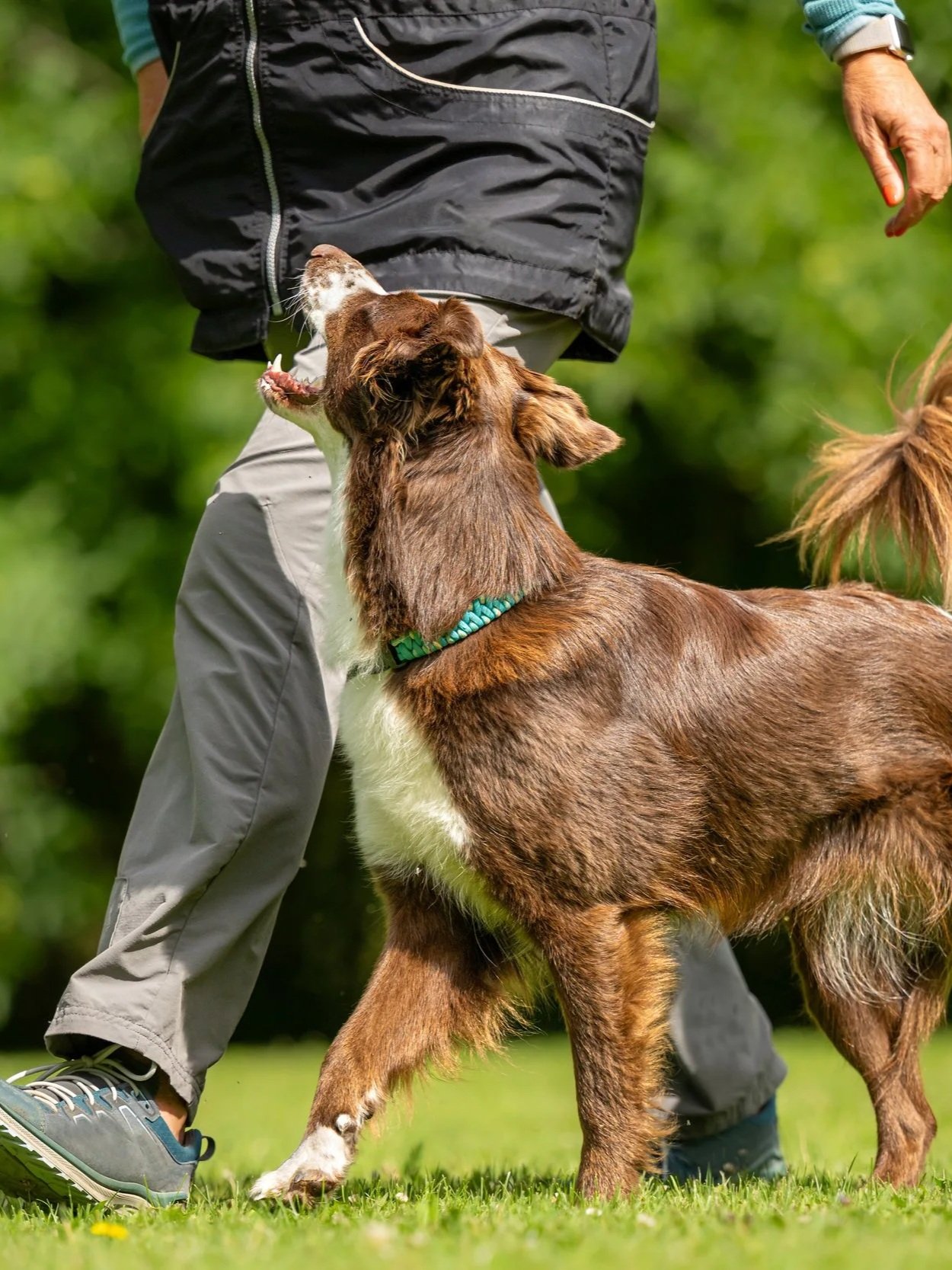
Want it to Work? Think of Recall as an Invitation, Not a Demand
At Resilient Rover, we don’t view recall as a command barked into the wind. We view it as an invitation into connection. You’re essentially asking, “Are you ready to come with me?”
Sometimes the answer is yes. Sometimes the answer is no. That’s ok. Dogs aren’t recall robots, they’re living beings…2 year old toddlers with fur. They have their own needs and motivations, and sometimes they don’t align. It’s on us to find out why, and meet them where they are.
If you truly need your dog to come, the most effective response is rarely to escalate your voice. It’s to reduce the gap—physically and emotionally. Move closer. Step into their world. Help their nervous system shift gears. When you meet them where they are, instead of insisting they meet you where you are, you turn empathy into trust.
And trust is what makes recall actually work. If you’re steady, reliable, fun, tasty, etc. – they’ll seek you out. If you’re loud, scary and punitive, they’ll go the other way every time.
Why This Matters More Than You Think
When recall is framed as pass-or-fail, tension builds on both ends of the leash. The human feels embarrassed or frustrated. Then the dog feels pressure, stress and maybe even fear of punishment. Over time, repetition of the cue itself can lose meaning in the dog’s mind.
But when recall becomes part of an ongoing conversation that acknowledges the dog’s amazing, yet also in many ways very limited, mental and emotional capabilities….you create something much stronger than compliance. You create willingness. You create connection.
Connection travels well. It holds up under distraction. It recovers after mistakes. It strengthens with time and experience. This kind of partnership is the direct outgrowth of trust.
Want to Go Deeper?
Learning to read availability in real time is a skill. It’s subtle. It’s powerful. And it changes everything. In our coaching sessions, we teach clients how to interpret their dog’s emotional state, adjust the Three D’s strategically, and build recall that feels calm, confident, and connected—even in high-energy environments. If you’re ready to move beyond black-and-white recall and into a more collaborative, resilient relationship with your dog, we’d love to support you.
Because recall isn’t about control. It’s about connection. Recall is one of the clearest expressions of Partnership, Empathy, and Trust a dog can give to a human.